Jumat, 28 Agustus 2015

Mad Men and Philosophy: Nothing is as it Seems


A look at the philosophical underpinnings of the hit TV show, "Mad Men"With its swirling cigarette smoke, martini lunches, skinny ties, and tight pencil skirts, Mad Men is unquestionably one of the most stylish, sexy, and irresistible shows on television. But the series becomes even more absorbing once you dig deeper into its portrayal of the changing social and political mores of 1960s America and explore the philosophical complexities of its key characters and themes. From Socrates, Plato, and Aristotle to John Kenneth Galbraith, Milton Friedman, and Ayn Rand, Mad Men and Philosophy brings the thinking of some of history's most powerful minds to bear on the world of Don Draper and the Sterling Cooper ad agency. You'll gain insights into a host of compelling Mad Men questions and issues, including happiness, freedom, authenticity, feminism, Don Draper's identity, and more.Takes an unprecedented look at the philosophical issues and themes behind AMC's Emmy Award-winning show, Mad MenExplores issues ranging from identity to authenticity to feminism, and moreOffers new insights on your favorite Mad Men characters, themes, and storylines

Mad Men and Philosophy will give "Mad Men" fans everywhere something new to talk about around the water cooler.


Download

Philosophy in the Tragic Age of the Greeks


For Nietzsche the Age of Greek Tragedy was indeed a tragic age. He saw in it the rise and climax of values so dear to him that their subsequent drop into catastrophe (in the person of Socrates - Plato) was clearly foreshadowed as though these were events taking place in the theater.
And so in this work, unpublished in his own day but written at the same time that his The Birth of Tragedy had so outraged the German professorate as to imperil his own academic career, his most deeply felt task was one of education. He wanted to present the culture of the Greeks as a paradigm to his young German contemporaries who might thus be persuaded to work toward a state of culture of their own; a state where Nietzsche found sorely missing.

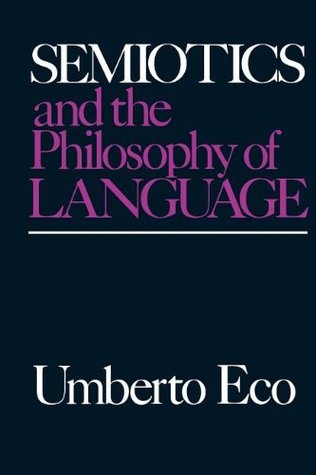
emiotics and the Philosophy of Language


"Eco wittily and enchantingly develops themes often touched on in his previous works, but he delves deeper into their complex nature... this collection can be read with pleasure by those unversed in semiotic theory." Times Literary Supplement"

Kamis, 27 Agustus 2015

The Art of Rhetoric


Few, if any, writers in history have made major contributions to as many fields of knowledge as Aristotle...

'If there are two definitive features of ancient Greek civilization,' writes Hugh Lawson-Tancred in his wide-ranging Introduction, 'they are articulacy and competition.' In the city-states oratorical competence was an essential asset for politicians in the Assemblies and Councils and even for ordinary citizens in the courts of law. In response, the technique of rhetoric rapidly developed, bringing virtuoso performances and a host of practical manuals for the layman. Yet if many of these were little more than collections of debaters' tricks, the hugely influential Art of Rhetorichas a far deeper purpose. It is here that Aristotle (384-322 B.C.) establishes the methods of informal reasoning, provides the first aesthetic evaluation of prose style and offers detailed observations on character and the emotions. 'Persuasiveness,' suggests Lawson-Tancred, 'becomes for the first time a systematic and even scientific exercise; it can indeed be taught, but only by a deep grasp of some of the most central features of human nature.' His fine translation makes freshly available an epoch-making work of literary criticism.
Download

Think: A Compelling Introduction to Philosophy


Here at last is a coherent, unintimidating introduction to the challenging and fascinating landscape of Western philosophy. Written expressly for "anyone who believes there are big questions out there, but does not know how to
approach them," Think provides a sound framework for exploring the most basic themes of philosophy, and for understanding how major philosophers have tackled the questions that have pressed themselves most forcefully on human consciousness. 
Simon Blackburn, author of the best-selling Oxford Dictionary of Philosophy, begins by making a convincing case for the relevance of philosophy and goes on to give the reader a sense of how the great historical figures such as Plato, Hume, Kant, Descartes, and others have approached its central themes. In a lively and accessible style, Blackburn
approaches the nature of human reflection and how we think, or can think, about knowledge, fate, ethics, identity, God, reason, and truth. Each chapter explains a major issue, and gives the reader a self-contained guide through the problems that the philosophers have studied. Because the text approaches these issues from the gound up, the untrained reader will emerge from its pages able to explore other philosophies with greater pleasure and understanding and be able to think--philosophically--for him or herself. 
Philosophy is often dismissed as a purely academic discipline with no relation to the "real" world non-philosophers are compelled to inhabit. Think dispels this myth and offers a springboard for all those who want to learn how the basic techniques of thinking shape our virtually every aspect of our existence.

A Thousand Plateaus: Capitalism and Schizophrenia


Gilles Deleuze (1925-1995) was Professor of Philosophy at the University of Paris VIII. He is a key figure in poststructuralism, and one of the most influential philosophers of the twentieth century. Felix Guattari (1930-1992) was a psychoanalyst at the la Borde Clinic, as well as being a major social theorist and radical activist. 

A Thousand Plateaus is part of Deleuze and Guattari's landmark philosophical project, Capitalism and Schizophrenia - a project that still sets the terms of contemporary philosophical debate. A Thousand Plateaus provides a compelling analysis of social phenomena and offers fresh alternatives for thinking about philosophy and culture. Its radical perspective provides a toolbox for nomadic thought and has had a galvanizing influence on today's anti-capitalist movement.


Darwin's Dangerous Idea: Evolution and the Meanings of Life

In a book that is both groundbreaking and accessible, Daniel C. Dennett focuses his unerringly logical mind on the theory of natural selection, showing how Darwin's great idea transforms and illuminates our traditional view of humanity's place in the universe. Dennett vividly describes the theory itself and then extends Darwin's vision with impeccable arguments to their often surprising conclusions, challenging the views of some of the most famous scientists of our day.

Download