Selasa, 05 Mei 2015

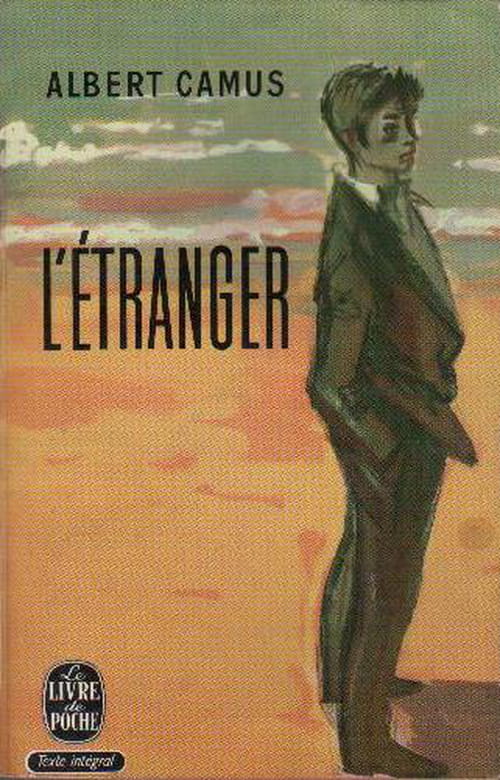
The Stranger


The Stranger is not merely one of the most widely read novels of the 20th century, but one of the books likely to outlive it. Written in 1946, Camus's compelling and troubling tale of a disaffected, apparently amoral young man has earned a durable popularity (and remains a staple of U.S. high school literature courses) in part because it reveals so vividly the anxieties of its time. Alienation, the fear of anonymity, spiritual doubt--all could have been given a purely modern inflection in the hands of a lesser talent than Camus, who won the Nobel Prize in 1957 and was noted for his existentialist aesthetic. The remarkable trick of The Stranger, however, is that it's not mired in period philosophy.
The plot is simple. A young Algerian, Meursault, afflicted with a sort of aimless inertia, becomes embroiled in the petty intrigues of a local pimp and, somewhat inexplicably, ends up killing a man. Once he's imprisoned and eventually brought to trial, his crime, it becomes apparent, is not so much the arguably defensible murder he has committed as it is his deficient character. The trial's proceedings are absurd, a parsing of incidental trivialities--that Meursault, for instance, seemed unmoved by his own mother's death and then attended a comic movie the evening after her funeral are two ostensibly damning facts--so that the eventual sentence the jury issues is both ridiculous and inevitable.
Meursault remains a cipher nearly to the story's end--dispassionate, clinical, disengaged from his own emotions. "She wanted to know if I loved her," he says of his girlfriend. "I answered the same way I had the last time, that it didn't mean anything but that I probably didn't." There's a latent ominousness in such observations, a sense that devotion is nothing more than self-delusion. It's undoubtedly true that Meursault exhibits an extreme of resignation; however, his confrontation with "the gentle indifference of the world" remains as compelling as it was when Camus first recounted it. --Ben Guterson --
Download


The Fall (Albert Camus)

Soon after publishing The Fall, Albert Camus won the Nobel Prize for Literature. On the strength of this book alone, he deserved it. As a novel, The Fall improves upon its two predecessors, The Stranger and The Plague, in almost every way. The writing itself is much more confident, full of scathing wit and eloquent outrage. The intertwining of artistic aim and philosophical conviction is utterly seamless. Neither is compromised, as they were at times in the earlier works. Rather, both art and philosophy are employed here to serve the STORY. In short, The Fall delivers on what Camus had always promised- a masterful work of literature that also FORCES the reader to examine his/her life.
Jean-Baptiste Clamence is a "good guy." He uses his abilities as a lawyer to protect the poor and weak. When asked, he helps blind people across the street. Wherever one finds a righteous cause, he appears to support it. He is a well-respected member of the community. Could one truly find SERIOUS fault with such a person?
Well, as of late, Clamence has had a slight problem: he has felt the need to be honest, both with others and himself. The truth often leads people to strange places, and so Clamence, formerly rich and recently disgraced, finds himself at a sailors' bar in Amsterdam. Here, he finally comes clean about his life and his actions (one and the same, possibly?). He's no criminal, surely not, or not the WORST kind anyway. His crime is much more insidious, and it consists of what we are all guilty of: he is two-faced. His purest acts of selflessness are actually forms of self-deception, for they mask that in the end, he is really satisfying himself. The purest altruism hides a secret loathing of those he "helps"; the deepest, most self-sacrificial love conceals a seething desire to dominate.
In this dingy bar, Clamence unburdens himself, not just of his "crimes," but of the author's (catch the quote at the beginning of the book) and humanity's too. Only a strong (and dishonest) reader can finish this book without cringing in self-recognition at the daily hypocrisies that add up to the modern human condition. Camus does not necessarily counsel despair though. At different points in The Fall, one can see the ever-present potential of humanity to better itself. What Camus does doubt though is the general willingness of people (himself included) to make the personal choices needed to truly bring ABOUT this "betterment."
The Fall is not entirely bleak reading. In several places, it is laugh-out-loud funny (No! Surely not sober Camus...), displaying the humour of a barroom Voltaire. Moreover, few could fail to delight in the sheer craft and elegance of the author's prose. Still, the book does raise searing questions about how to live (or waste) one's life. If one has been "sleepwalking" before reading The Fall, it will be almost impossible to do afterwards. Wake up with this brilliant, unsparing slap in the collective face of mankind. (Amazon.com)

Camus (Blackwell Great Minds)

Reflecting the profound influence he continues to exert on popular consciousness, Camus examines the complete body of works of French author and philosopher Albert Camus, providing a comprehensive analysis of Camus’ most important works—most notably The Myth of Sisyphus, The Stranger, The Fall, The Plague, and The Rebel—within the framework of his basic ethical orientation. Makes Camus’ concerns clear in terms that will resonate with contemporary readers Reveals the unity and integrity of Camus’ writings and political activities Discusses Camus’ ongoing relevance by showing how he prefigures many postmodern positions in philosophy, literature, and politics.

Download
 

L'Etranger

In 1930 Camus suffered a serious attack of tuberculosis, an illness which eventually forced him to abandon his plans for an academic career. His first publications began to appear two years later in Sud, a minor literary magazine founded by one of his friends at the lycée d’Alger.6 It is tempting to see his literary preoccupations at this time in terms of his illness: tuberculosis was a revelation of the sudden possibility of death and a reminder that life, which he loved so much, was finite. However, Lottman tells us that Camus’s desire to write dates from when he was 7 years old,7 and Camus himself liked to stress the specifically literary origins of some of his early works, citing Gide,8Grenier,9and André de Richaud.10 Whatever one’s own view of this, by the time Camus published L’Enverset l’endroit in 1937, literary and personal experiences had combined to produce a body of thought which strives to demonstrate that love of life and lucid awareness of the finality of death are logically compatible attitudes to life. Death may well render life meaningless, but it also renders it precious.


The Myth of Sisyphus: And Other Essays

The collection of stories published as Le Mythe de Sisyphe in 1942 was the second of the absurds. The work has been cited by critics as refined and carefully crafted. The collection stands as more literature than philosophy. Camus spent at least five years writing and editing the work. The polish is clear with the very first sentence: "There is only one really serious philosophical problem, and that is suicide."

According to Camus, suicide was a sign that one lacked the strength to face "nothing." Life is an adventure without final meaning, but still, in Camus' eyes, worth experiencing. Since there is nothing else, life should be lived to its fullest and we should derive meaning from our very existence. For Camus, people were what gave life meaning. However, in the moments following the realization that one will die, that one's descendants will die...in fact, that the earth will die, one senses a deep anxiety. And, as an atheist, Camus doubted meaning beyond this life.

"A world which can be explained, even through bad reasoning, is a familiar one. On the other hand, in a world suddenly devoid of illusion and light, man feels like a stranger." Isolated from any logic, without an easy explanation for why one exists, there occurs what some call "existential angst." While Camus did not use the phrase, it adequately describes the sensation. Even existentialists of faith struggle with creation, wondering why humanity exists when a Creator would not need mankind. Merely wanting to create something seems like a curious reason to create life. So, even for those of faith, the initial creation can be puzzling.

How does one exist without any given purpose or meaning? How does one develop meaning? Le Mythe de Sisyphe addresses this directly in the retelling of the famous tale. Considering the plight of Sisyphus, condemned to roll a stone up a mountain knowing the stone will roll down yet again, it is easy to declare his existence absurd and without hope. It would be easy to believe Sisyphus might prefer death. But in Camus' myth, he does not.

"Living the absurd...means a total lack of hope (which is not the same as despair), a permanent reflection (which is not the same as renunciation), and a conscious dissatisfaction (which is not the same as juvenile anxiety).

For Camus, Sisyphus is the ultimate absurd hero. He was sentenced for the crime of loving life too much; he defied the gods and fought death. The gods thought they found a perfect form of torture for Sisyphus. He would constantly hope for success, that the stone would remain at the top of the mountain. This, the gods thought, would forever frustrate him.

Yet, defying the gods yet again, Sisyphus is without hope. He abandons any illusion that he might succeed at the assigned task. Once he does so, Camus considers him a hero in the fullest sense of the word. Sisyphus begins to view his ability to do the task again and again--to endure the punishment--as a form of victory.
"The struggle itself towards the heights is enough to fill a man's heart. We have to imagine Sisyphus happy."

The Rebel

By one of the most profoundly influential thinkers of our century, The Rebel is a classic essay on revolution. For Albert Camus, the urge to revolt is one of the "essential dimensions" of human nature, manifested in man's timeless Promethean struggle against the conditions of his existence, as well as the popular uprisings against established orders throughout history. And yet, with an eye toward the French Revolution and its regicides and deicides, he shows how inevitably the course of revolution leads to tyranny. As old regimes throughout the world collapse, The Rebel resonates as an ardent, eloquent, and supremely rational voice of conscience for our tumultuous times.

The Plague

The Nobel prize-winning Albert Camus, who died in 1960, could not have known how grimly current his existentialist novel of epidemic and death would remain. Set in Algeria, in northern Africa, The Plague is a powerful study of human life and its meaning in the face of a deadly virus that sweeps dispassionately through the city, taking a vast percentage of the population with it.

Download